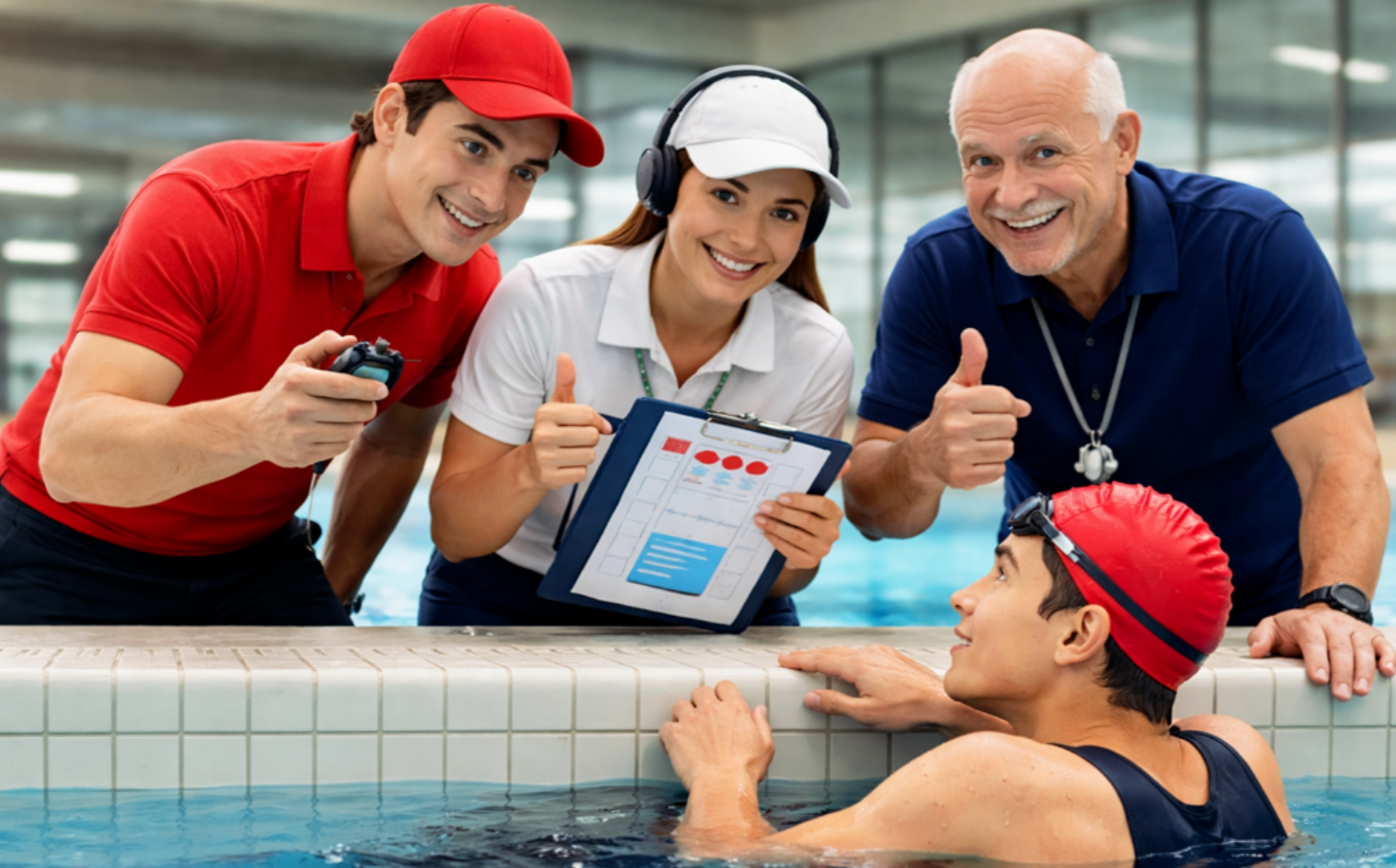
Success in aquatic sports is not only about fast swimmers or talented players. Behind every great athlete is a team of coaches who guide their development over many years. Unlike many other sports, aquatics often involves a long-term commitment. Many athletes begin as young as four years old and continue through high school, university, or even Masters-level competition.
During this journey, athletes usually move through different training groups, each led by different coaches. Because of this, coaching in aquatics is rarely the work of a single person. Instead, it is a collective effort where each coach contributes to the athlete’s growth at a particular stage.
For clubs, the real challenge is not finding drills or training ideas—there are countless resources available online. The challenge is creating continuity and collaboration among coaches so that athletes continue progressing smoothly, no matter who is leading the session. Without clear communication and shared goals, progress can easily be lost when coaches change.
A strong aquatic program focuses on long-term development. As athletes move from early engagement (around ages 4–8) through their teenage years, each stage should prepare them for the next. Coaches need to work together to ensure that swimmers build the right technical, physical, and mental foundations before advancing.
Communication and shared planning are key elements of this process. Team leaders should establish clear goals for every group, ensuring that all coaches are aligned with the club’s overall vision. Regular conversations between coaches help identify what is working well and where adjustments are needed.
Clubs also benefit from creating simple systems that support collaboration. Shared documents, such as a “living document” that is updated each season, allow coaches to record successful drills, challenges, and ideas for improvement. Short handover notes between coaches can help maintain continuity when athletes move between groups. These resources are especially valuable for volunteer coaches, who often bring passion and dedication but may need clear guidance and ready-to-use materials.
Mentorship also plays an important role. Experienced coaches can support newer or volunteer coaches through regular check-ins, shadowing opportunities, and practical feedback. This creates a culture where knowledge is shared and coaching quality remains consistent.
When clubs invest in communication, documentation, and mentorship, everyone benefits. Athletes progress more smoothly through the program, coaches feel supported and confident, and the club remains strong even when staff changes occur. In the end, building great aquatic athletes is truly a team effort.