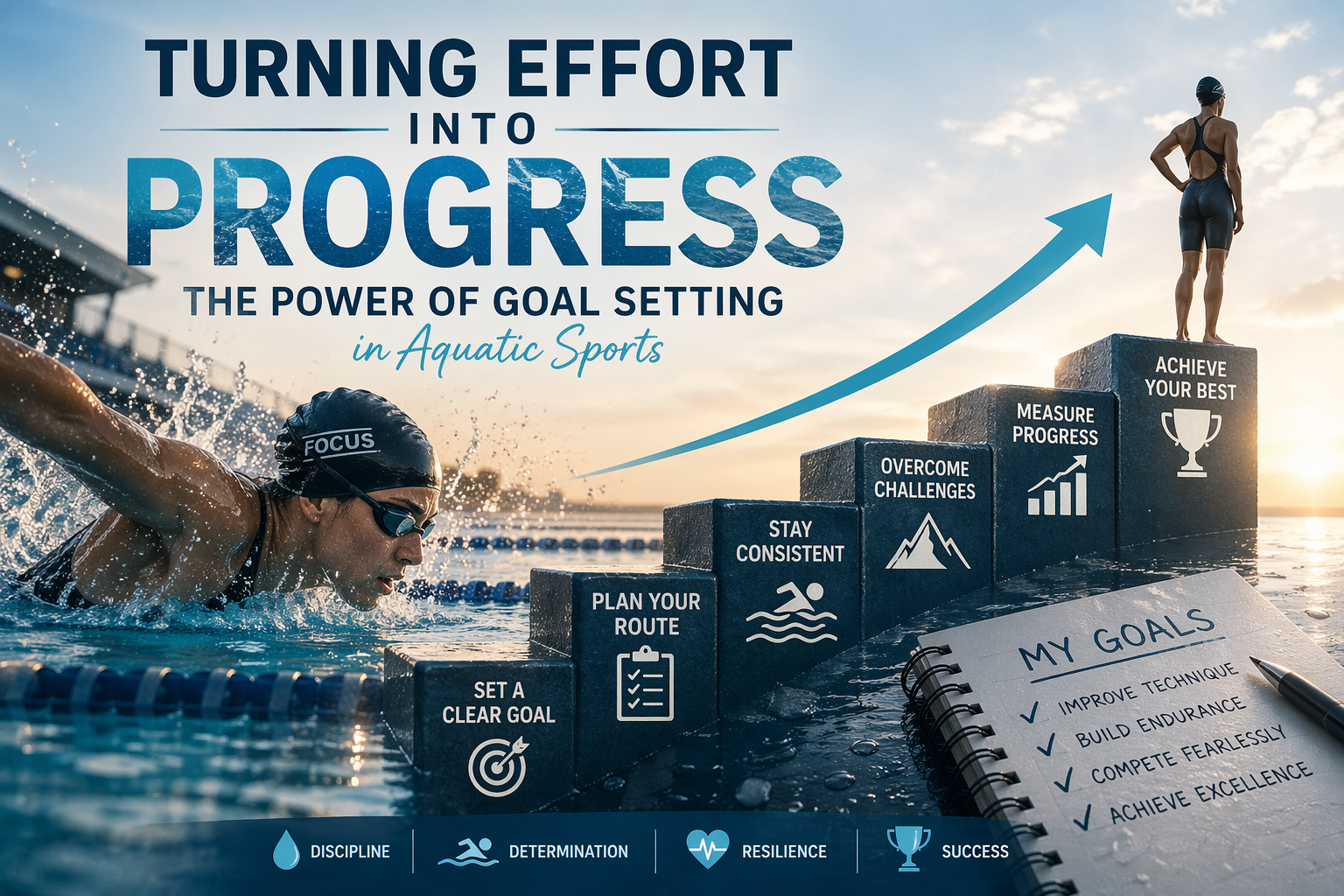
In aquatic sports, effort alone is not enough to guarantee improvement. Progress happens when athletes have clear goals that guide their daily training. Whether it’s a swimmer chasing a qualifying time, a water polo player improving defensive skills, a diver refining entries, or a Masters athlete focusing on fitness, well-defined goals help turn practice into meaningful progress.
Effective goals need to be simple, specific, and connected to action. When goal-setting becomes too complicated, athletes can feel overwhelmed. On the other hand, goals that are too vague often fail to inspire real change. The most successful approach combines big performance ambitions with clear process goals that explain how to achieve them.
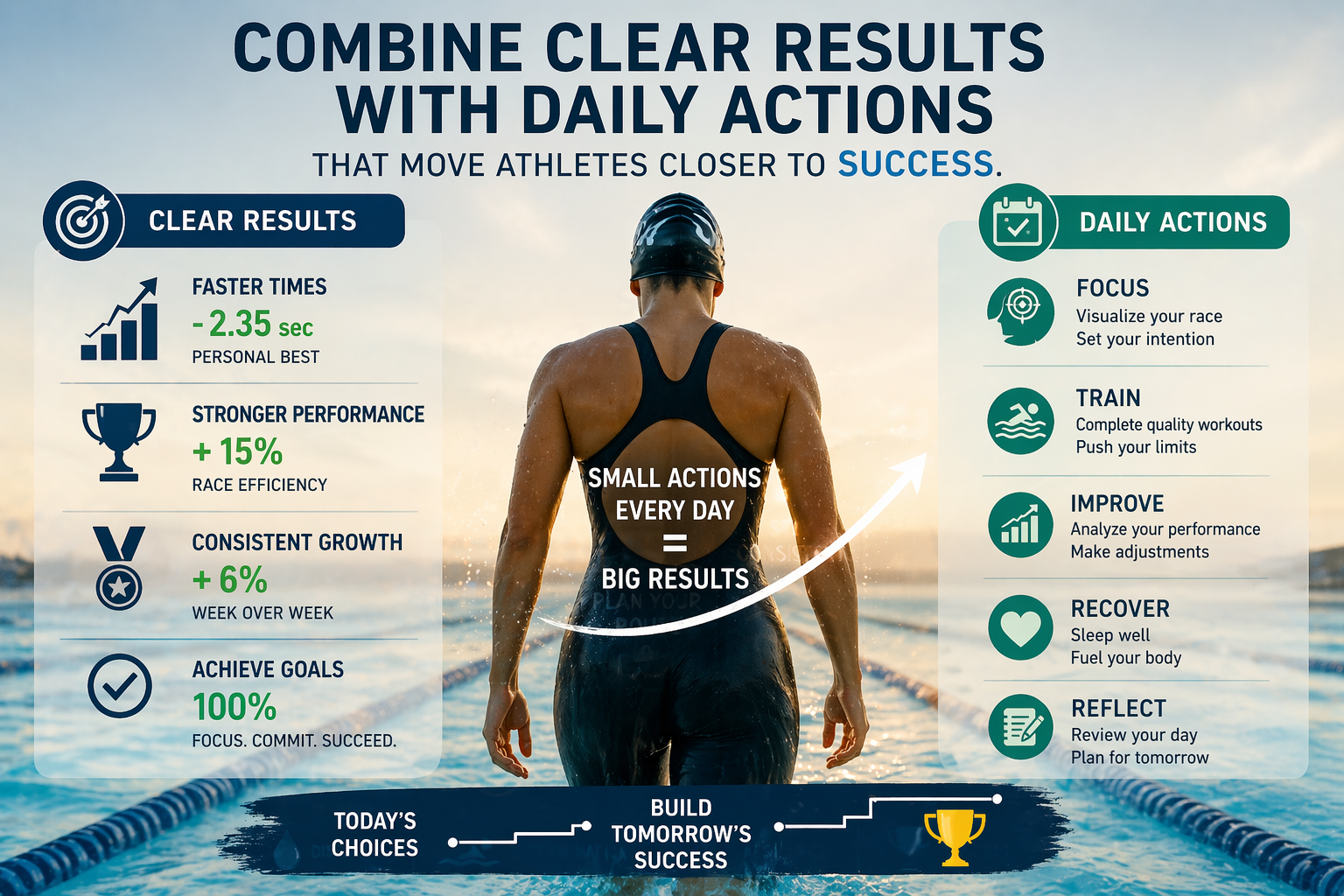
Performance goals focus on measurable outcomes, such as race times, competition placements, or game statistics. These goals give athletes something concrete to aim for. However, performance goals alone are not enough. Athletes also need process goals—the specific skills, habits, and training actions that lead to improvement.
For example, a swimmer who wants to drop one second in the 50-meter freestyle might discover that weak kicking is the main limitation. The process goal could then include multiple kick-focused training sessions each week along with leg-strength exercises on land. By focusing on these actions, the swimmer creates a clear pathway toward the performance goal.
A helpful step in this process is “gap analysis”—identifying what athletes at the desired level are doing differently. Once the gap is clear, coaches and athletes can design simple actions to close it.
Communication also plays a critical role. Coaches should be able to explain any goal in less than one minute. If a goal is too complicated to explain quickly, it is unlikely to stick with the athlete. In addition, every drill or training set should be linked to a purpose. When athletes understand why they are doing a particular exercise, their motivation and focus increase.
Goal setting works across all aquatic disciplines—from swimming and diving to artistic swimming, water polo, and open water racing. Regardless of the sport, the principle remains the same: combine clear results with daily actions that move athletes closer to success.
When athletes understand both what they are aiming for and how to get there, training becomes more purposeful. Goals transform effort into progress, and everyday practice becomes a step toward long-term achievement.