In aquatic sports, success rarely happens by chance. Behind every strong performance is a carefully planned season that guides athletes step by step toward their biggest competitions. Season planning works much like building a map: coaches start with the final destination and work backward to determine how to get there.
Whether preparing swimmers for national championships, a water polo team for a major tournament, divers for an important meet, or artistic swimmers for international trials, the principle is the same. A clear plan helps balance technical development, physical conditioning, and competition readiness over time.
Aquatic sports require both technical precision and physical strength, and these qualities must be built gradually. Season planning organizes training into phases so that athletes can develop the right skills and fitness at the right moment. This structure also gives athletes confidence, knowing that each practice session contributes to their peak performance when it matters most.
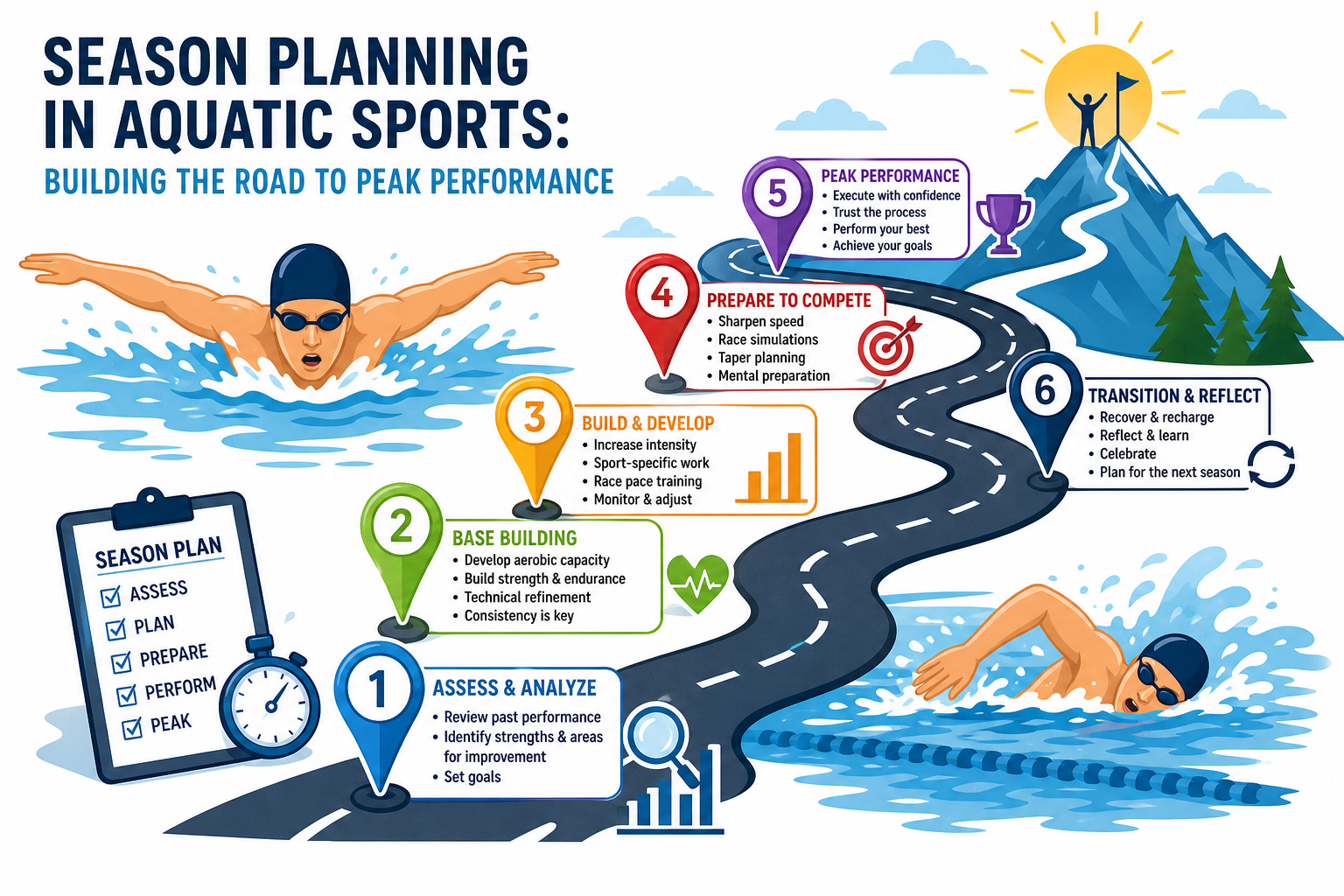
The first step in planning a season is defining the main goals. These might include qualifying times, championship events, skill milestones, or team performance targets. Once the goals are clear, coaches evaluate the current level of the athletes—their fitness, technical skills, and overall readiness. From there, the season can be planned backward, breaking the year into training phases, then monthly objectives, and finally weekly training focuses.
A practical approach often begins by mapping out key competitions first. After that, the season can be divided into phases such as foundational training, skill challenges, power development, and competition preparation. Organizing the season into one-month blocks allows enough time for progress while still giving coaches the flexibility to adjust plans when needed.
Within each phase, training sessions should have a clear purpose. Rather than trying to accomplish everything at once, each workout should focus on developing one main skill or physical adaptation. For example, an early phase might emphasize technique fundamentals such as turns, body position, and breathing rhythm. Later phases may increase training intensity, refine pacing, and eventually simulate competition environments.
One of the most important principles in season planning is keeping the big picture in mind. Coaches should focus first on the overall pathway toward the main event before becoming too detailed about individual workouts or energy systems. At the same time, it’s helpful to frame goals not only around the final result but also around the progress made at each stage of the journey.
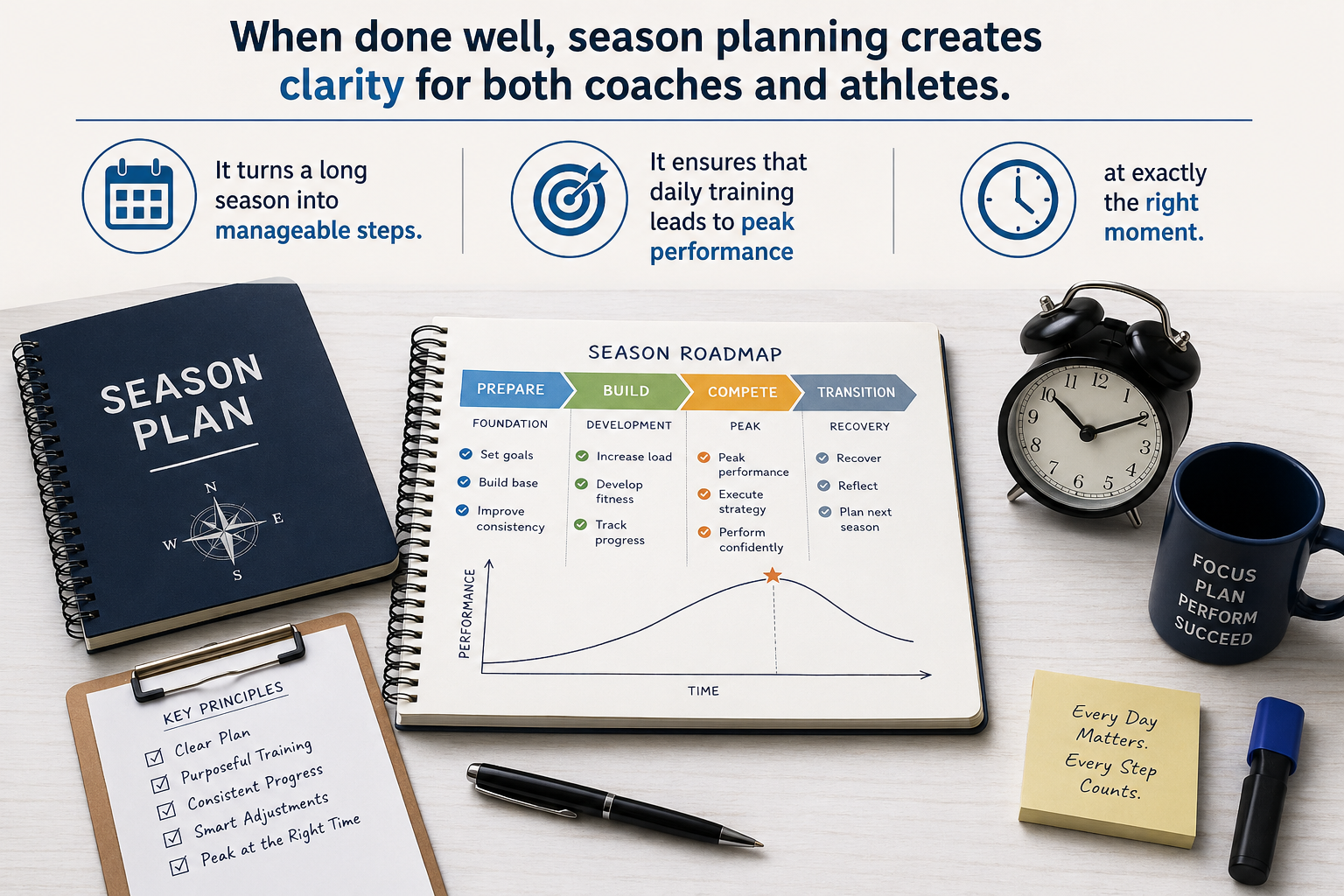
When done well, season planning creates clarity for both coaches and athletes. It turns a long season into manageable steps and ensures that daily training leads to peak performance at exactly the right moment.