
Hydrotherapy—the therapeutic use of water—has been used for centuries, but modern research shows it's much more than a traditional wellness practice. Whether through hot baths, cold plunges, steam treatments, or aquatic exercise, water can trigger powerful physiological responses that support health and well-being. Scientists have found that hydrotherapy can positively influence several major body systems, making it a valuable tool for both prevention and recovery.
One of the most significant effects of hydrotherapy is on the cardiovascular system. Warm water helps blood vessels dilate, improving circulation and reducing strain on the heart, while cold water stimulates the nervous system and increases alertness. These temperature-driven responses can help the body adapt more efficiently to stress and may contribute to better overall cardiovascular function.
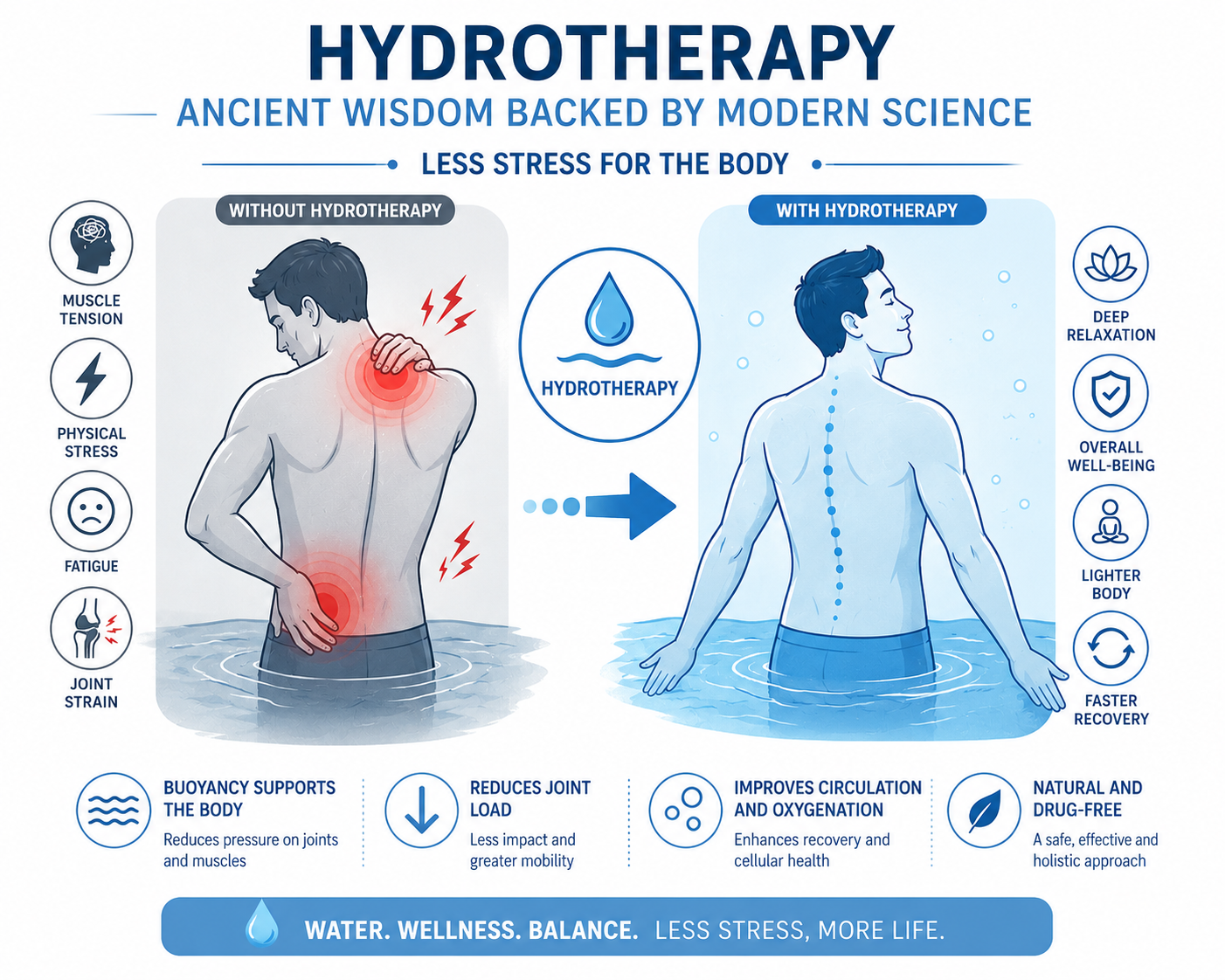
Hydrotherapy is also widely recognized for its ability to reduce pain and improve mobility. The buoyancy of water reduces pressure on joints and muscles, making movement easier and less painful. This is particularly beneficial for people living with arthritis, fibromyalgia, chronic pain, or recovering from injury. Athletes also use cold-water immersion and contrast therapy to ease muscle soreness and support recovery after intense exercise.
Beyond physical benefits, hydrotherapy appears to have a positive impact on the immune and nervous systems. Research suggests that regular cold-water exposure may stimulate certain immune responses, while both warm and cold therapies can influence hormones and neurotransmitters linked to mood, stress, and well-being. Many people report feeling calmer, more energized, and mentally refreshed after hydrotherapy sessions.
The science is clear: hydrotherapy is far more than a relaxing bath or a spa luxury. By harnessing the unique properties of water—temperature, pressure, and buoyancy—it can support circulation, pain management, recovery, and overall wellness. Sometimes, one of the most effective ways to help the body heal is also one of the simplest.